NBA Player Props Betting: Daily Odds and Values
 Available in US
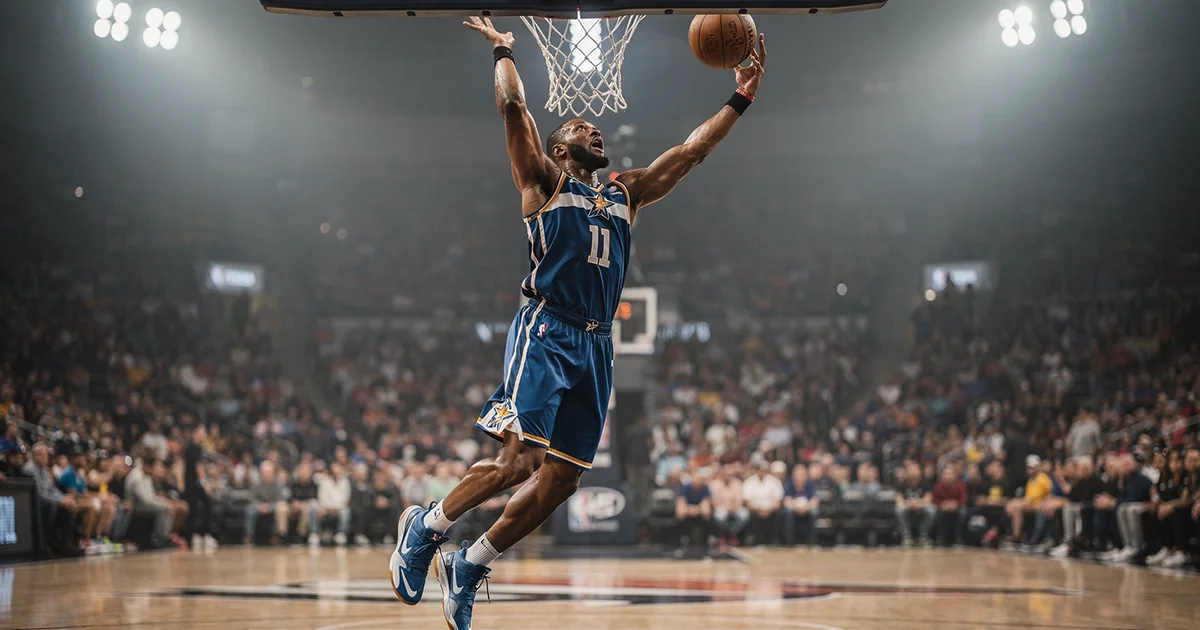
Player props have transformed from a niche betting market into one of the most popular ways to wager on NBA games. Instead of betting on team outcomes, you’re wagering on individual player performances: how many points someone will score, how many rebounds they’ll grab, or whether they’ll dish out more or fewer assists than a posted number. This granular focus appeals to bettors who follow specific players closely and believe they can spot inefficiencies in how sportsbooks price individual production.
The explosion of player prop betting coincides with the rise of daily fantasy sports and the general trend toward more detailed basketball analysis. Fans who track player usage rates, minutes distributions, and matchup data find natural applications for that knowledge in prop markets. Where team-level betting requires synthesizing countless variables into a single prediction, player props narrow the focus to one person’s performance against a specific opponent on a specific night.
This guide covers everything you need to profit from NBA player prop betting. From understanding the different prop types to developing research frameworks and avoiding common mistakes, you’ll learn how to approach this market with the analytical rigor it demands. Player props reward preparation, and bettors who invest time in understanding the factors that drive individual performance gain meaningful edges over casual participants.
What Are NBA Player Props? — Finding Value in NBA Player Prop Markets
Types of Player Props
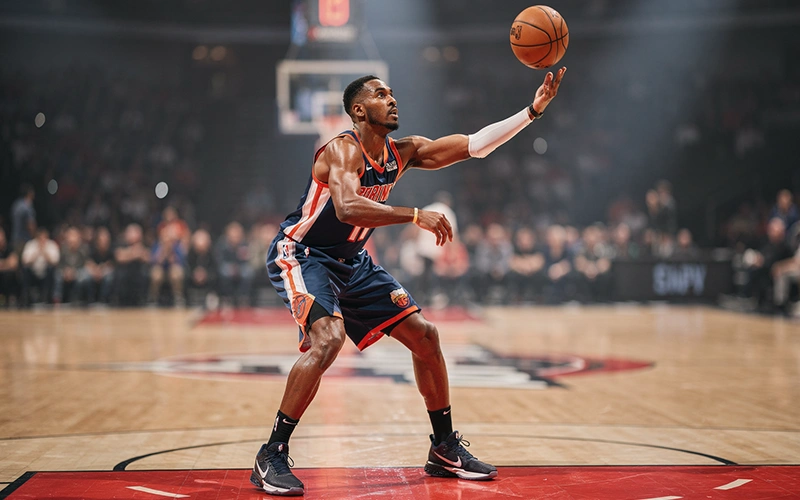
The most common NBA player props focus on the primary statistical categories: points, rebounds, and assists. Sportsbooks post lines for each category, and you bet on whether a player will go over or under that number. If Jayson Tatum’s points prop sits at 27.5, you’re predicting whether he’ll score 28 or more or fall short at 27 or fewer. These core props exist for virtually every relevant player in every game, creating abundant betting opportunities throughout the season.
Join thousands of successful punters who rely on our expert NBA betting portal for their daily research.
Tracking player performance during the game opens up highly profitable opportunities for in-game basketball wagering.
Beyond the big three categories, specialty props cover additional statistics. Three-pointers made props attract bettors who follow shooting specialists and perimeter-heavy offenses. Steals and blocks props appeal to those tracking defensive performers. Double-double and triple-double props offer yes/no wagers on whether a player will reach double figures in multiple categories. Some sportsbooks even offer props on minutes played, though these markets tend to be less liquid.
Combination props bundle statistics together, most commonly in the form of points plus rebounds plus assists, often abbreviated as PRA. These aggregated props smooth out variance somewhat because a player who underperforms in one category might compensate in another. However, the combined nature also introduces correlation effects that complicate analysis. Understanding how different statistical categories relate to each other for specific players improves your combination prop handicapping.
Points, Rebounds, Assists
Points props dominate player prop betting volume because scoring is the most visible and emotionally engaging statistic. Bettors naturally gravitate toward betting on whether their favorite players will light up the scoreboard. This popularity means points props receive the most attention from oddsmakers, making them potentially the most efficient market. Finding value requires either superior information or contrarian perspectives that the market hasn’t fully incorporated.
Rebounds props split into offensive and defensive boards, though most betting markets focus on total rebounds. Big men dominate this category, but modern positionless basketball creates opportunities for wings and guards who crash the glass. Understanding team rebounding schemes and opponent tendencies on the glass informs your projections. Some teams prioritize defensive rebounding to limit second-chance points, while others allow guards to leak out for transition opportunities.
Assists props correlate heavily with playing time and team offensive style. Point guards typically see the highest assist props, but playmaking wings and even bigs who operate as facilitators in certain systems warrant attention. Ball movement offense generates more assist opportunities than isolation-heavy schemes. Analyzing how a team generates their offense reveals which players are positioned to accumulate assist totals.
Specialty Props
Three-pointers made props have grown alongside the league’s perimeter shooting explosion. Elite shooters regularly attempt 10 or more threes per game, creating volatile outcomes that can swing dramatically based on shooting variance. A player might average 3.5 makes per game but go 1-for-9 one night and 6-for-11 the next. This variance creates both opportunity and risk in three-point props.
Steals and blocks props involve lower numbers and higher variance than scoring categories. A player averaging 1.5 steals might have their over set at 1.5, meaning any game with two or more steals cashes. These binary-feeling outcomes make steals and blocks props feel almost like coin flips, but defenders with consistent playing time and aggressive tendencies offer more predictable patterns than the numbers might suggest.
First basket scorer props add an element of randomness that some bettors enjoy. Predicting which player will make the opening bucket involves factors like who takes the tip, which team gets first possession, and which player the offense runs their initial action for. The high juice on these props reflects their lottery-like nature, but studying team tendencies on opening possessions reveals exploitable patterns.
How Sportsbooks Set Player Props

Statistical Projections
Oddsmakers begin with statistical models that project each player’s expected output based on season averages, recent performance, and opponent-adjusted metrics. These models incorporate home versus road splits, days of rest, and historical performance against the specific opponent. The resulting projection forms the baseline around which the prop line is set, typically at the median expected outcome to balance action on both sides.
Advanced projections go beyond simple averages to consider usage rate fluctuations, teammate presence, and game script expectations. If a star player’s teammate is injured, models should adjust for increased usage and potentially higher individual production. If the game projects as a blowout, models might anticipate reduced minutes for starters and lower counting stats. These contextual adjustments separate sophisticated projections from naive averaging.
The quality of sportsbook projections varies, creating opportunities for bettors with superior models. Smaller sportsbooks or those new to player props might rely on cruder projections that miss important adjustments. Comparing lines across multiple books reveals which sportsbooks project players differently, and consistently finding softer lines at certain books provides sustainable edges.
Minutes Expectations
Minutes projections drive player props more than casual bettors realize. A player’s per-minute production is relatively stable, but his playing time varies based on game flow, foul trouble, and coaching decisions. Projecting 32 minutes versus 36 minutes for a player averaging 0.8 points per minute changes the expected points output from 25.6 to 28.8, a significant difference against a prop line of 27.5.
Sportsbooks estimate minutes based on recent rotation patterns, team depth, and game context. Blowout projections reduce expected minutes for starters. Back-to-back games might see managed loads for certain players. Matchups demanding specific defensive personnel could increase minutes for defenders usually used sparingly. Identifying when your minutes projection differs from the market’s creates prop value.
Injury reports affect minutes projections throughout the betting period. A teammate’s absence might increase another player’s role, boosting expected minutes and production. Late scratches announced close to game time create the largest discrepancies because the market has less time to adjust. Monitoring injury updates and understanding their cascading effects on playing time sharpens your prop analysis.
Matchup Adjustments
Sophisticated prop pricing accounts for how specific opponents affect player production. A point guard facing the league’s worst perimeter defense should see elevated assist and scoring expectations compared to facing an elite defensive unit. These matchup adjustments rely on defensive efficiency metrics, pace factors, and historical head-to-head data when available.
The depth of matchup adjustments varies across sportsbooks and prop types. Major sportsbooks apply meaningful adjustments to high-volume props like points, while specialty props might receive less attention. This inconsistency creates opportunities in less popular markets where matchup effects remain underpriced. Bettors who track defensive performance against specific positions and play types can identify when the market’s adjustment falls short.
Individual defender matchups matter for star players who command significant attention. If Kawhi Leonard draws the defensive assignment on a team’s primary scorer, that scorer’s props should reflect the challenge. However, defensive assignments aren’t always predictable, and switches occur throughout games. Understanding team defensive schemes and who typically guards whom provides insight into likely matchup dynamics.
Researching Player Props

Usage Rate Analysis
Usage rate measures what percentage of team possessions a player uses while on the floor through shot attempts, free throws, and turnovers. High-usage players dominate their team’s offense and see more opportunities to accumulate statistics. Understanding each player’s usage rate contextualizes their production potential and helps identify when props are set appropriately relative to opportunity volume.
Usage rate changes based on lineup combinations and opponent strategies. A secondary scorer might see elevated usage when the primary option faces double teams or sits on the bench. Tracking usage rate across different lineup configurations reveals how players perform in various roles. Some players thrive with increased usage while others struggle when asked to carry heavier loads.
Comparing usage rates to prop lines identifies potential mismatches. A player with 25% usage whose prop seems set based on 22% usage likely offers over value if circumstances suggest he’ll maintain the higher rate. Conversely, a player whose recent usage spike appears unsustainable might present under value. Usage rate provides the foundation for understanding opportunity, which drives statistical production.
Minutes Distribution
Monitoring rotation patterns reveals how coaches distribute playing time across their rosters. Some coaches run tight eight-man rotations, concentrating minutes among starters and key reserves. Others spread minutes more evenly, limiting even star players to low-30s totals. Understanding these philosophical differences helps project individual playing time more accurately.
Game context affects minutes distribution beyond baseline rotation patterns. Close games see starters playing extended fourth-quarter minutes, while blowouts trigger early bench deployment. Projecting game competitiveness influences minutes expectations, which in turn affects prop projections. A game expected to be close might push starter minutes higher than their season average, boosting production potential.
Back-to-back situations and the second half of the season introduce load management considerations. Older stars and players with injury histories might see reduced minutes as teams prioritize health over regular season outcomes. Tracking which players typically rest or play reduced roles in these spots improves your minutes projections when these situations arise.
Defensive Matchup Impact
Individual defenders significantly affect offensive player production. Elite perimeter defenders suppress scoring and assist totals for opposing guards, while dominant rim protectors reduce interior scoring opportunities. Identifying these defender-matchup effects adds precision to your prop analysis beyond team-level defensive metrics.
Tracking how players perform against specific defensive schemes reveals tendencies the market might miss. Some scorers struggle against switching defenses that deny their preferred actions, while others exploit the mismatches switching creates. Understanding each player’s strengths and weaknesses against different defensive looks informs prop direction.
Defensive attention varies based on team composition. A star surrounded by limited offensive threats faces more double teams and defensive focus than one playing alongside multiple scoring options. This attention allocation affects assist opportunities as well; players who draw defensive attention might create more passing lanes for teammates while seeing their own scoring efficiency decline.
Recent Form vs. Season Averages
The tension between recent performance and season-long averages presents a recurring analytical challenge. A player on a hot streak might have props set closer to their recent elevated production, creating under value if regression to their baseline is likely. Conversely, a slumping player might offer over value if their struggles appear temporary and their true talent level exceeds recent results.
Identifying the cause of recent performance deviations helps determine their sustainability. A player shooting 45% from three over the last five games after a season average of 35% is likely experiencing positive variance that will regress. A player whose assists have spiked following a teammate’s injury might maintain that production as long as the lineup remains altered. Context distinguishes meaningful changes from statistical noise.
Sportsbooks face the same challenge and sometimes overcorrect in either direction. Lines chasing recent hot streaks present under opportunities, while lines slow to adjust to legitimate usage changes offer overs. Developing frameworks for when to trust recent form versus season baselines improves your ability to spot these market inefficiencies.
Prop Betting by Position
Point Guard Props
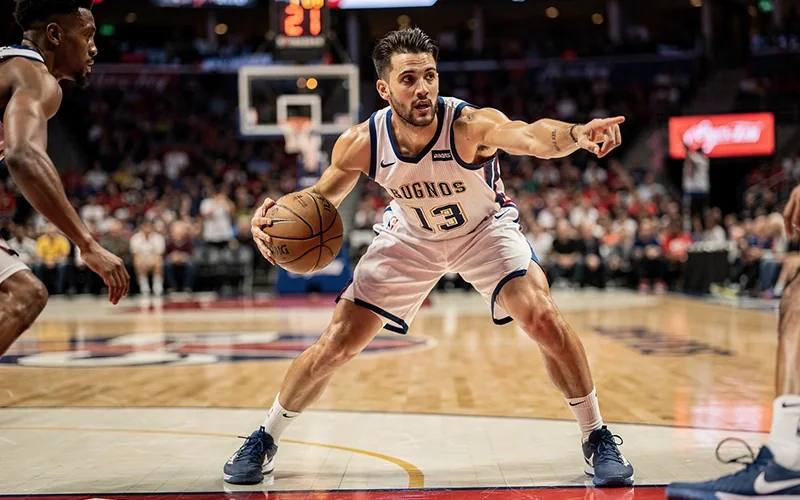
Point guards offer the most diverse prop opportunities given their involvement in both scoring and playmaking. Assist props depend heavily on team offensive style, with ball-movement systems generating more passing opportunities than isolation-heavy schemes. Points props for scoring point guards require analyzing defensive matchups against perimeter creators.
Turnover props for point guards deserve attention despite their unglamorous nature. High-usage point guards who handle the ball on most possessions accumulate turnovers through sheer volume. Games against aggressive, trapping defenses push turnover totals higher. Finding over value on turnover props for ball-dominant guards facing pressure defenses offers a contrarian angle.
Combination props work particularly well for point guards whose production spans multiple categories. A player averaging 18 points, 4 rebounds, and 8 assists might see a PRA line around 30, smoothing out variance in any individual category. These aggregate props reduce the impact of game flow on specific statistics while capturing overall involvement.
Wing Player Props
Wing players present varied prop profiles depending on their role. Primary scoring wings like Jayson Tatum or Kevin Durant see points props as their most relevant market. Secondary wings who contribute across categories might offer better value in combination props where their balanced production is captured.
Three-point props for shooting-specialist wings attract significant action. Players like Klay Thompson or Buddy Hield live and die by their perimeter shooting, making their three-point made props highly volatile. Analyzing defensive matchups against shooters and team schemes designed to free them for looks informs these prop selections.
Rebounding props for wings vary based on size and team rebounding philosophy. Larger wings often crash the glass aggressively, while smaller wings prioritize transition opportunities. Understanding each wing’s role in team rebounding schemes contextualizes their rebounding prop potential beyond raw physical attributes.
Big Man Props
Center and power forward props emphasize rebounds and interior scoring. Points props for bigs depend on offensive role, with some serving as primary options while others function primarily as finishers. Understanding whether a big creates his own offense or relies on guards to feed him informs how defensive matchups affect his scoring potential.
Rebound props for starting bigs typically range from 8 to 14 depending on minutes and role. Opposing center matchups significantly affect rebounding outcomes; facing a dominant rebounder reduces opportunities while playing against a poor rebounding team inflates totals. Pace also matters because more shot attempts create more rebounding chances.
Blocks props for shot-blocking bigs offer volatile opportunities. A player averaging 2.0 blocks might have his over set at 1.5, meaning games with two or more blocks cash. Opponent offensive style affects blocking opportunities; teams attacking the rim frequently present more blocking chances than perimeter-oriented offenses. Matching shot-blocking centers against attacking opponents reveals potential over value.
Advanced Player Prop Strategies
Injury-Related Opportunities
Teammate injuries create ripple effects that boost certain player props. When a team’s primary ball handler misses time, the backup point guard sees elevated assist opportunities. When a starting wing sits, the replacement might see increased shot attempts. These usage redistributions present prop value when the market underestimates how much opportunity shifts to remaining players.
The timing of injury news affects how much value remains available. Injuries announced days before a game allow the market to fully adjust prop lines. Late scratches announced hours before tip-off create windows where props haven’t been repriced. Bettors positioned to act quickly on late injury news can capture value before lines move.
Secondary effects of injuries sometimes escape market attention. A star’s absence might not only boost his replacement’s props but also increase opportunities for other starters who now face less defensive attention. Thinking through the full cascade of usage changes following injury news reveals opportunities beyond the obvious replacement-player prop.
Pace and Style Matchups
Game pace directly affects counting statistics. Fast-paced games generate more possessions, providing more opportunities for every statistical category. When two up-tempo teams meet, player props should reflect the elevated pace. Games between slow-paced, defensive-minded teams see compressed statistical totals. Adjusting your projections for expected game pace improves accuracy.
Playing style matchups affect specific statistical categories differently. A team that attacks the rim frequently creates more rebounding opportunities than one relying on jump shots. A team that turns the ball over frequently provides steal opportunities for opposing defenders. Understanding how team styles interact reveals category-specific adjustments beyond general pace considerations.
Blowout potential influences prop outcomes through minutes effects. A game expected to be a blowout in either direction likely sees reduced minutes for the winning team’s starters during garbage time. If your player props rely on normal playing time, heavily lopsided game projections should give you pause about assuming typical production.
Blowout Scenarios
Projected blowouts present a prop betting dilemma. Starters on winning teams might play 28 minutes instead of their usual 34, depressing their statistical output. However, blowout victims sometimes see inflated statistics in garbage time against disengaged defenses. Understanding which direction blowout effects push requires analyzing team-specific garbage time patterns.
Some coaches pull starters early in blowouts, while others let them pad statistics deeper into games. Tracking these tendencies by team reveals which players’ props are most affected by blowout scenarios. Betting unders on starters for teams expected to dominate makes sense if the coach historically empties his bench with comfortable leads.
Backup players benefit from blowout scenarios through extended playing time. A reserve who typically plays 15 minutes might log 25 in a lopsided game, pushing his props higher than his per-minute production alone would suggest. Identifying potential blowouts and targeting backup player overs offers a contrarian angle that casual bettors overlook.
Correlated Props for Parlays
Parlaying correlated props leverages relationships between different statistical outcomes. If you believe a point guard will dominate the ball, his points and assists overs might both hit while his teammate’s scoring prop goes under. Recognizing these correlations allows you to build parlays where legs support each other rather than representing independent events.
Positive correlations boost parlay value when the connection between props is stronger than the market assumes. A scorer who gets hot might exceed both his points and three-pointers made props simultaneously. A point guard who takes over might hit his assists over while his team’s other playmaker goes under on assists. These related outcomes should hit together more often than independent probability calculations suggest.
Negative correlations require caution. Parlaying two teammates’ points overs faces the reality that shot attempts are finite. If one player exceeds expectations, another might fall short. Understanding which props correlate positively versus negatively prevents constructing parlays where your legs work against each other.
Finding Value in Player Props
Line Shopping for Props
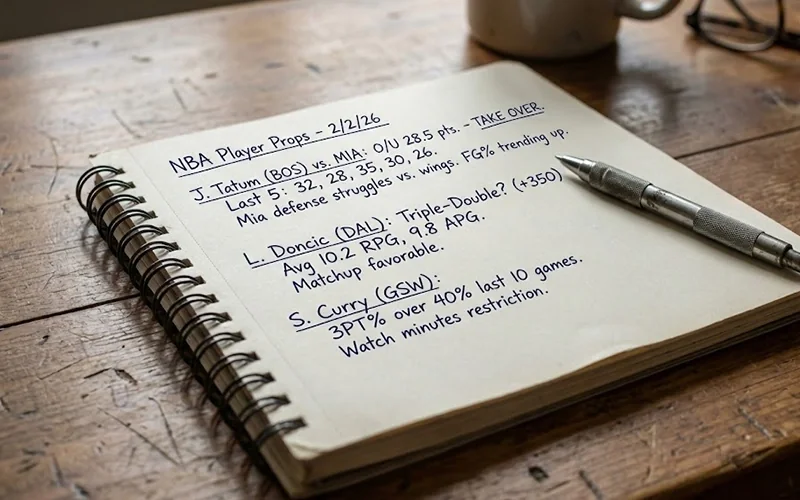
Prop lines vary more across sportsbooks than spread or total lines. One book might offer LeBron James points at 26.5 while another posts 27.5. This full-point difference dramatically affects your winning probability. Maintaining accounts at multiple sportsbooks allows you to consistently bet the best available number, which compounds into significant edge over a season.
The half-point differences that seem trivial matter over sample sizes. Betting 27.5 instead of 27 eliminates the push scenario on exactly 27 points, converting what would be a returned stake into either a win or loss. Over hundreds of prop bets, consistently getting the better number adds meaningful expected value even when the difference appears small.
Sportsbook timing also affects line shopping opportunities. Some books post props early and take sharp action that moves lines. Others wait and copy market prices without independent analysis. Identifying which books offer softer initial lines and which adjust more slowly to news creates systematic advantages in your prop betting approach.
Identifying Soft Lines
Soft lines occur when a sportsbook’s projection misses something the market will eventually correct. Perhaps a book failed to adjust for a teammate’s injury or didn’t account for a particularly favorable matchup. Identifying these errors requires understanding what a fair line should be, which demands the analytical work described throughout this guide.
Comparing your projection to market prices reveals potential soft lines. If you project 29 points for a player whose prop sits at 26.5, you’ve identified a potential over opportunity assuming your analysis is sound. The magnitude of the discrepancy indicates the strength of the potential edge; larger gaps between your projection and the market suggest more value.
Soft lines don’t persist long in efficient markets. Sharp bettors exploit mispriced props quickly, pushing lines toward accurate values. Acting decisively when you identify value matters because hesitation often means watching the line move past your target before you bet.
Timing Your Bets
Prop lines evolve from opening to closing as information emerges and money flows. Betting early captures opening line value before sharp corrections, while betting late ensures you have complete information about lineups and injury status. The optimal timing depends on your information quality and whether you expect the line to move in your favor or against you.
Injury news typically moves props significantly because individual player availability directly affects usage distribution. If you have reason to believe an injury will be announced, waiting might provide better lines. If you’re betting independent of injury news, earlier betting often captures value that sharp money will eventually correct.
Game-day props see the most volatile line movement as final lineup information becomes available. The hours before tip-off reveal any late scratches or minute restrictions that affect props. Bettors who monitor team announcements closely during this window can act on information before sportsbooks fully adjust their lines.
Common Player Prop Mistakes
Overreacting to small sample sizes represents the most pervasive prop betting error. A player who scored 35 points in his last game doesn’t suddenly deserve a points prop five points higher than his season average. Hot streaks and cold spells are normal variance; consistently adjusting your projections to recent extremes leads to systematically chasing outcomes that will regress.
Ignoring minutes projections torpedoes otherwise sound analysis. Your statistical projection might be perfect on a per-minute basis, but if you expect 35 minutes and the player only logs 28, your prop bet loses despite your production rate analysis being correct. Always anchor your projections in realistic minutes expectations.
Neglecting correlation in parlay building creates false diversification. Five-leg prop parlays might feel diversified, but if all five props positively correlate with the same game script, they’re effectively one bet. Understanding how your parlay legs relate to each other reveals whether you’re truly diversifying or doubling down on a single outcome.
Conclusion
NBA player prop betting offers unique opportunities for bettors willing to develop specialized knowledge about individual player performance. The factors driving props differ from team-level betting, requiring dedicated research into usage rates, minutes distributions, and matchup effects. This analytical investment pays dividends because player prop markets receive less professional attention than spreads and totals.
Success in player props demands integrating multiple information sources into coherent projections. Understanding how sportsbooks set lines provides the foundation, while researching the factors that drive deviation from baselines reveals where value exists. Position-specific considerations and advanced strategies refine your approach into a systematic edge.
The player prop market continues expanding as sportsbooks introduce new bet types and bettors develop increasingly sophisticated analysis. Those who commit to understanding this market deeply will find consistent opportunities that more casual participants miss. Your edge comes from doing work others won’t do.
Written by the editors at nba Bets.